Iran Conflict Triggers Oil Shock 2026: Strait of Hormuz Crisis Sends Oil Surging, Gold Higher — What It Means for US Growth, Inflation, Fed Cuts, EUR/USD & USD/JPY
The weekend of February 28–March 2, 2026, just rewrote the global economic playbook.
US and Israeli strikes killed Iran’s Supreme Leader Ayatollah Ali Khamenei. Iran retaliated with missiles and drones. Tanker traffic through the Strait of Hormuz — the narrow chokepoint carrying 20% of the world’s oil and major LNG flows — ground to a halt. Markets woke up Monday to chaos: oil prices spiking, safe-haven assets flying, and currencies shifting fast.
Here’s the clear, no-hype breakdown you need if you invest, run a business, or just fill up your gas tank.
The Spark That Ignited the Shock
Over the weekend, coordinated US-Israeli airstrikes hit Iranian leadership targets, confirming Khamenei’s death on Saturday. Iran declared mourning — and retaliation. Tankers stopped moving through the Strait of Hormuz after Iranian warnings and reported attacks on vessels. Shipping data shows dozens of crude and LNG carriers now anchored or stationary outside the strait.
Oil Prices Explode: From $70 to $80+ Overnight
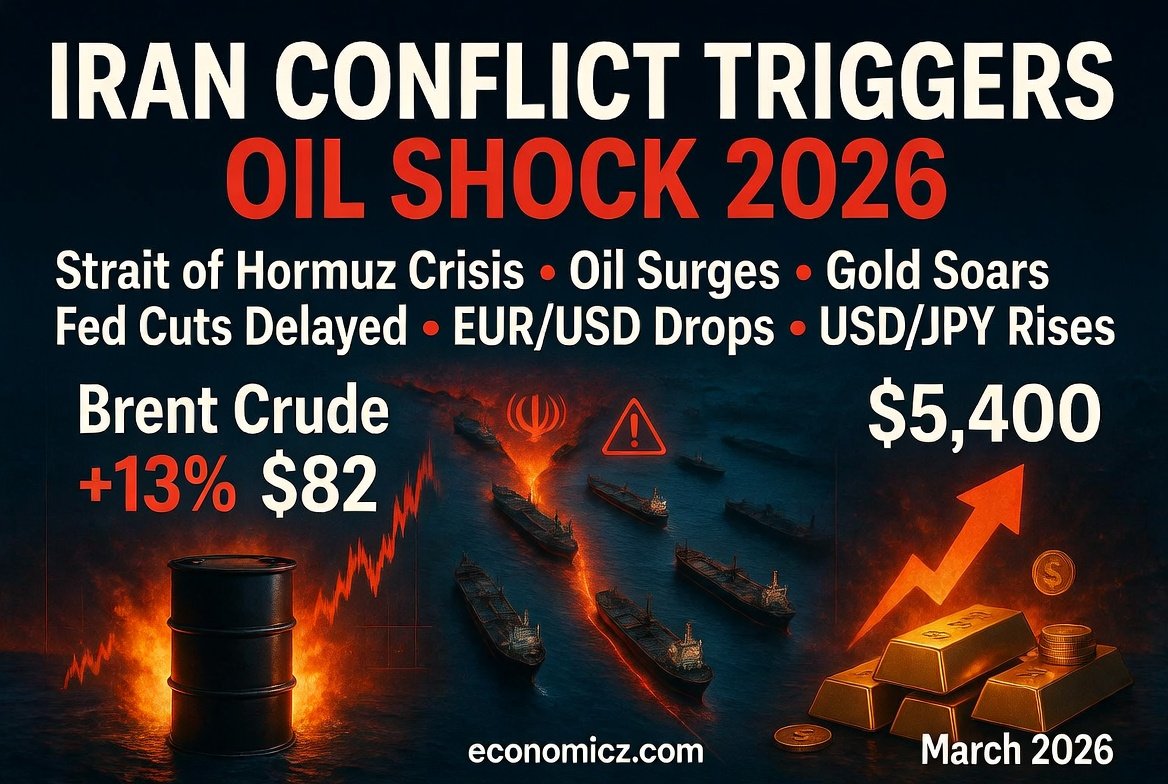
Brent crude, the global benchmark, jumped as much as 13% in early trading Monday, touching over $82 before settling in the high $77–80 range. West Texas Intermediate (WTI) rose 7–8% to around $72–73. Analysts warn of $100+ if the closure lasts weeks.
Why it matters for Americans:
- Gas prices at the pump are already climbing.
- Fertilizer, plastics, and transport costs will follow — feeding into grocery bills and everything you buy.
- Europe and Asia (heavily dependent on Gulf oil) face bigger pain. The US is more insulated thanks to shale, but not immune.
Short-term winners: US shale producers, energy stocks (Exxon, Chevron up 4–5% early Monday), and defense contractors. Losers: Airlines, importers, and consumers everywhere.
US Growth: Resilient… But Facing a Test
The US economy entered 2026 on solid footing — Goldman and IMF forecasts around 2.5–2.8% GDP growth. Domestic oil production (we’re a net exporter) cushions the blow more than in the 1970s oil shocks.
But prolonged disruption changes the math:
- Higher energy costs act like a tax on consumers and businesses.
- Global trade slows (shipping reroutes, insurance costs soar).
- CEO surveys already flagged geopolitics as a top risk. This just made it real.
Most analysts see a modest drag on 2026 growth — perhaps 0.3–0.7 percentage points shaved off — unless the strait stays blocked for months (recession risk then jumps sharply).
Inflation Alarm: Higher for Longer
This is the Fed’s nightmare scenario.
Oil is the single biggest driver of headline inflation. A sustained $10–15 jump adds roughly 0.5–0.7 points to global CPI. US core inflation was already sticky; add energy and food ripple effects, and the path to 2% gets bumpier.
Result? Markets are pricing in fewer Fed rate cuts in 2026. The first cut, once expected as early as May–June, is now being pushed toward July or later. Bond yields rose Monday as traders unwound some easing bets.
Translation for you: Mortgage rates, car loans, and credit cards stay higher longer. The “soft landing” narrative just got a geopolitical wrinkle.
Gold Soars as the Ultimate Safe Haven
While stocks swung (S&P 500 futures briefly down 1% before partial recovery), gold did what gold does best.
Spot gold surged 2–3% Monday, briefly topping $5,390–5,418 per ounce — its highest in weeks. Investors piled in as tensions escalated. Silver and even palladium followed.
Why gold wins here:
- Classic safe-haven in war and uncertainty.
- Higher inflation expectations make it even more attractive.
- Central banks (already big buyers) and retail investors are both jumping in.
If the conflict drags, analysts see $5,500–5,600 as realistic near-term targets.
Currency Markets React: Dollar Strengthens, EUR/USD and USD/JPY Move Fast
The US dollar is the big winner in risk-off chaos.
EUR/USD dropped sharply, falling below 1.17 (down ~1% early Monday) to around 1.168–1.171. Europe is far more exposed to Gulf oil imports than the US, so higher energy costs hit the eurozone economy harder — and the ECB has less room to fight it.
USD/JPY climbed to 157.4–157.7 (up ~0.7–1.1%). Japan imports nearly all its oil. Higher prices weaken the yen, even as some safe-haven flows try to support it. The Bank of Japan’s rate-hike signals are being overshadowed by the energy shock.
Bottom line: Stronger dollar makes US exports pricier and emerging-market debt harder to service. If you travel abroad or hold foreign assets, watch these pairs closely.
Winners, Losers & Broader Ripples
Winners
- US energy sector & shale
- Gold miners & bullion
- Defense stocks
- Domestic manufacturers less reliant on imports
Losers
- Airlines & travel
- European & Asian importers
- Consumers (higher gas & goods prices)
- Risk assets (tech, small caps took early hits)
This week’s calendar just got hotter: PMI data, Friday’s jobs report, and Fed speakers will be read through the Iran lens.
Scenarios: What Happens Next?
- Short & Sharp (most likely base case): Conflict de-escalates in weeks. Oil settles back toward $70–75. Markets calm. Fed stays on track for gradual cuts.
- Prolonged Hormuz Pain: Strait blocked 1–3+ months. Oil spikes to $100+. Global growth slows. Fed pauses cuts or even hikes. Recession odds rise.
- Wider Regional Spillover: Hezbollah, Gulf states, or shipping attacks expand the war. Black-swan territory.
President Trump has signaled the campaign could last “weeks,” but markets hate uncertainty.
What Investors & Readers Should Do Right Now
- Diversify: Gold, energy, and quality US stocks offer buffers.
- Watch oil: Any sign of tankers resuming through Hormuz = quick relief rally.
- Stay liquid: Volatility is high — don’t chase moves.
- For businesses: Hedge fuel costs if possible.
The US economy is tougher than in past oil crises. Shale revolution + domestic production give us a real edge. But this weekend’s events prove geopolitics can still deliver sudden shocks.
The Strait of Hormuz isn’t just a map line — it’s the heartbeat of global energy. Right now, that heartbeat just skipped a beat.
Markets will digest this all week. I’ll keep updating economicz.com with fresh data and analysis.
What part of this shockwave are you most watching — gas prices, your 401(k), or gold? Drop a comment below or share this on X so your network stays ahead of the curve. #IranConflict2026 #OilPrices #GoldSurge #FedPolicy
(Article updated live as of March 2, 2026, 12:30 PM CST. All data sourced from real-time market feeds and major outlets.)